Key Takeaways
Ather Energy was founded in 2013 by Tarun Mehta and Swapnil Jain and focuses on designing and manufacturing electric two-wheelers.
The company launched its first electric scooter in 2018 and has built its business around scooters, software, charging infrastructure and after-sales service.
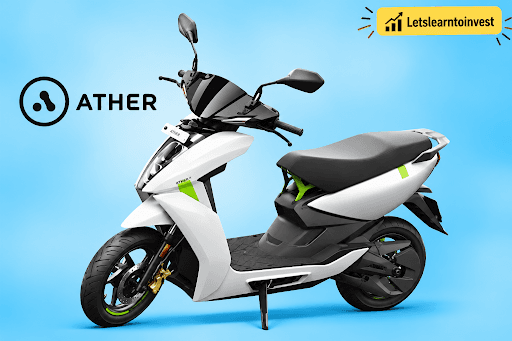
Ather currently operates two major product families: the performance-focused Ather 450 series and the family-oriented Ather Rizta.
Its manufacturing base is in Hosur, Tamil Nadu, while the company has been expanding its retail and service network across India and internationally.
Ather is not only selling electric scooters; it is building an EV ecosystem through its vehicles, software, charging network, experience centres and service infrastructure.
What Is Ather Energy?
Ather Energy is an Indian electric vehicle company focused primarily on electric two-wheelers.
The company was founded in 2013 by Tarun Mehta and Swapnil Jain. Its objective was not simply to convert a traditional petrol scooter into an electric vehicle. From the beginning, Ather positioned itself around designing an electric vehicle experience that combines hardware, software, connected technology, charging infrastructure and customer service.
Ather launched its first electric scooter in 2018. Since then, the company has developed from an early-stage EV startup into one of India's prominent electric two-wheeler manufacturers.
Today, Ather's portfolio is built around two distinct scooter families. The Ather 450 targets customers looking for a performance-oriented electric scooter, while the Ather Rizta is designed as a convenience-focused family scooter.
This shift is important because it shows how Ather has expanded beyond a niche technology-focused customer base and started addressing a much larger portion of the Indian scooter market.
Who Founded Ather Energy?

Ather Energy was founded by Tarun Mehta and Swapnil Jain in 2013.
The company emerged at a time when India's electric two-wheeler market was still in its early stages. Electric mobility was not yet as mainstream as it is today, and customers had concerns around battery technology, range, charging infrastructure, performance and reliability.
Ather's approach was to build an electric scooter as a technology product rather than treating electrification as simply replacing a petrol engine with a battery.
This philosophy became an important part of the company's identity.
Over the years, Ather invested in product development, battery technology, software, charging infrastructure and manufacturing capabilities. This allowed the company to create a broader ecosystem around its scooters.
The company officially describes itself as a pioneer in India's electric two-wheeler market and continues to focus on designing and manufacturing electric scooters.
How Does Ather Energy Make Money?
Ather's core business is the sale of electric two-wheelers.
The company designs its scooters, develops the technology behind them and sells them through its retail network. Its current portfolio includes the Ather 450 series and Ather Rizta.
However, the business model goes beyond simply selling a scooter.
Ather has created several connected parts of its business:
Electric scooters → Software & technology → Charging ecosystem → Experience centres → Service network → Accessories and ownership services
This ecosystem approach is important because an electric vehicle company needs to provide more than a vehicle.
Customers also need:
Charging access
Service support
Spare parts
Software updates
Customer support
Test rides
Financing options
Accessories
Reliable after-sales service
Therefore, Ather's business model can be understood as a combination of vehicle manufacturing and EV ecosystem development.
The company also operates Ather Grid, its charging network, which strengthens the ownership experience and creates another important part of its ecosystem. As of December 31, 2025, Ather reported more than 4,357 fast-charging points and neighbourhood chargers globally.
What Products Does Ather Energy Sell?
Ather currently has two primary product families.
Ather 450 Series
The Ather 450 family is positioned toward customers looking for a performance-oriented electric scooter.
The 450 range has been an important part of Ather's identity since its early years and focuses on features such as performance, connected technology, riding modes and software-enabled functionality.
The company has continued to upgrade the 450 platform with features such as traction control and MagicTwist technology.
Ather Rizta
The Ather Rizta represents a major expansion in Ather's strategy.
Rather than focusing primarily on performance enthusiasts, Rizta was designed as a family-oriented convenience scooter.
It offers features such as a larger seat, storage space and practical design aimed at everyday family usage.
This product has become extremely important to Ather's growth.
In FY25, Ather sold 155,394 electric two-wheelers, of which 88,869 were Rizta units, representing approximately 57% of total sales. The Ather 450 series accounted for 66,525 units, or approximately 43%.
This shows how Rizta helped Ather reach a broader customer segment.
Where Does Ather Energy Operate?
Ather has been expanding its presence across India, with particularly strong roots in southern India.
Historically, the company's strongest markets were in the South. According to its FY25 annual report, South India accounted for a significant share of Ather's sales, while the company was simultaneously expanding into western, northern and other markets.
The company has been particularly strong in markets such as:
Karnataka
Kerala
Tamil Nadu
Telangana
Andhra Pradesh
Goa
Maharashtra
Gujarat
Delhi
Its expansion is not limited to major metropolitan cities.
Ather has increasingly been entering Tier-2 and emerging cities as electric scooter adoption grows.
The company's retail strategy is based around Experience Centres, where customers can see the products, understand the technology and take test rides.
As of March 31, 2025, Ather had 351 Experience Centres in India. The company announced plans in June 2025 to expand to 700 Experience Centres across India by the end of FY26.
By December 31, 2025, Ather reported 600 Experience Centres, showing the speed at which the network was expanding.
Where Are Ather's Manufacturing Facilities?

Ather's manufacturing operations are based in Hosur, Tamil Nadu.
The company has two manufacturing facilities in Hosur, with one focused on vehicle assembly and another on battery manufacturing.
Manufacturing is strategically important for an EV company because batteries, motors, electronics, software and vehicle assembly all have to work together.
Ather has also been developing an additional manufacturing facility at Bidkin in the AURIC industrial area of Chhatrapati Sambhajinagar, Maharashtra.
The company said this upcoming facility is expected to increase its overall manufacturing capacity across facilities to approximately 1.42 million electric two-wheelers per year.
This expansion reflects Ather's expectation that India's electric two-wheeler market will continue growing.
It also reduces the company's dependence on a single manufacturing location and provides additional capacity to serve demand from different regions.
What Is Ather Grid and Why Is It Important?
Buying an electric scooter is only one part of the EV experience.
The customer also needs a convenient way to charge the vehicle.
This is where Ather Grid becomes important.
Ather Grid is the company's fast-charging network designed specifically for electric two-wheelers. Ather describes it as India's largest two-wheeler fast-charging network.
The charging network helps address one of the biggest concerns associated with EV adoption: range and charging convenience.
For example, imagine a customer using an electric scooter for daily commuting.
Charging at home may be sufficient for many regular journeys, but if the rider is travelling longer distances, having access to a fast charger can provide additional confidence.
This makes charging infrastructure an important part of the company's overall value proposition.
As of March 31, 2025, Ather reported more than 3,578 fast-charging points and neighbourhood chargers across India.
By December 31, 2025, the company reported more than 4,357 fast-charging points and neighbourhood chargers globally.
How Is Ather Performing Financially?
Ather's growth can also be seen through its operating performance.
According to its FY25 annual report, the company recorded:
155,394 units of total sales
₹23,052 million in total income
19% adjusted gross margin
11.4% national market share, according to the company's cited VAHAN data
19.7% market share in South India, according to the same disclosure
Ather's FY25 sales increased 42% year-on-year, with the launch and expansion of Rizta playing a major role.
The company's market share also increased in several non-southern markets.
For example, its FY25 quarterly market-share data showed significant improvement in Gujarat, where its reported share increased from 4.9% in Q1 FY25 to 19.6% in Q4 FY25. Maharashtra increased from 4.8% to 9.4% over the same period.
These numbers indicate that Ather's growth story is increasingly about geographic expansion as well as product expansion.
Why Is Ather Expanding Beyond South India?
Ather initially developed a particularly strong presence in southern India.
However, the company recognised that the Indian electric scooter opportunity is much larger than the South.
One reason for the geographic shift was the introduction of Rizta.
The company said that Rizta helped it gain traction in markets such as Gujarat, Maharashtra, Delhi, Madhya Pradesh, Odisha and Chhattisgarh.
This makes strategic sense.
Different regions can have different customer preferences.
A performance-focused scooter may appeal strongly to one customer group, while families may prioritise storage, comfort, practicality and convenience.
Rizta allowed Ather to address a broader customer segment.
This means Ather's expansion strategy is not simply about opening more stores. It is also about building products for different types of customers.
How Important Is Ather's Service Network?
For an electric vehicle manufacturer, selling the vehicle is only the beginning of the customer relationship.
After-sales service can strongly influence customer satisfaction and brand reputation.
Ather has therefore been expanding its service infrastructure alongside its retail network.
In March 2026, the company announced that it had reached 500 authorised service centres across India, almost doubling its service network from 277 centres during FY26.
The company also operates Gold Service Centres and offers an ExpressCare initiative, which enables periodic maintenance at participating centres in approximately 60 minutes.
This expansion is important because EV adoption depends not only on customers wanting an electric vehicle but also on their confidence that the vehicle can be serviced conveniently.
A strong service network can therefore become a competitive advantage.
What Is Ather Energy's Growth Strategy?
Ather's growth strategy can broadly be understood through five areas.
1. Expanding the Product Portfolio
The company is moving beyond its original performance-focused positioning and addressing larger customer segments through products such as Rizta.
2. Expanding Geographically
Ather is increasing its presence in northern, western and eastern markets while strengthening its existing southern base.
3. Increasing Manufacturing Capacity
The planned Maharashtra facility is expected to significantly increase production capacity and support future growth.
4. Building the Charging Ecosystem
Ather Grid provides charging infrastructure that supports the company's vehicles and improves the overall ownership experience.
5. Strengthening Service Infrastructure
The expansion to 500 service centres demonstrates that Ather is investing in the post-sale customer experience alongside vehicle sales.
Together, these strategies show that Ather is trying to build more than an electric scooter brand.
It is building an integrated electric mobility ecosystem.
What Makes Ather Energy Different From a Traditional Two-Wheeler Company?
A traditional two-wheeler company typically focuses heavily on manufacturing, distribution and servicing of vehicles.
Ather takes a more technology-oriented approach.
Its vehicles are connected products that combine hardware and software.
The company also operates its own charging ecosystem and invests in digital features, customer experience and service infrastructure.
This means the customer relationship does not necessarily end when the scooter is sold.
Software updates, charging infrastructure, service, accessories and other ecosystem elements can remain part of the ownership journey.
This approach is particularly relevant as the automobile industry moves toward connected and software-enabled vehicles.
What Challenges Does Ather Energy Face?
Despite its growth, Ather operates in a highly competitive and rapidly changing EV market.
Competition comes from established automobile manufacturers as well as other EV startups.
Companies are competing on price, range, performance, charging speed, design, technology, financing and after-sales service.
Another challenge is the cost of batteries and other EV components.
Customer expectations are also changing quickly. A scooter that appears technologically advanced today may face pressure from newer products tomorrow.
Ather must therefore continue investing in research and development while simultaneously expanding production, distribution and service.
There is also the challenge of achieving sustainable profitability while scaling rapidly.
For an EV company, growth requires significant investment in manufacturing capacity, technology, charging infrastructure, retail outlets and service networks.
Therefore, Ather's next phase will depend not only on selling more scooters but also on how efficiently it can scale its entire ecosystem.
What Does the Future Look Like for Ather Energy?
Ather's future growth will depend on India's broader electric mobility adoption and the company's ability to capture a larger share of that market.
The company has already demonstrated that it can move from a niche performance scooter position toward a broader portfolio through Rizta.
Its expanding retail network, service infrastructure, charging network and manufacturing capacity provide the foundation for further growth.
The next challenge is to maintain product innovation while reaching more customers across India.
If Ather can successfully combine competitive products, strong technology, reliable service, charging infrastructure and efficient manufacturing, it can strengthen its position in India's rapidly developing electric two-wheeler industry.
Final Thoughts
Ather Energy started in 2013 with the ambition of building electric two-wheelers for a changing India.
From its first scooter in 2018, the company has grown into a broader EV ecosystem combining vehicles, software, charging and service infrastructure.
The introduction of Rizta has helped Ather move beyond the performance-scooter segment and reach a much wider family audience.
Its expansion across India, growing service network and investment in manufacturing capacity show that the company is preparing for the next stage of EV adoption.
Ather's story is therefore not just about selling electric scooters it is about building an entire ecosystem around electric mobility.
Frequently Asked Questions About Ather Energy
1.When was Ather Energy founded?
Ather Energy was founded in 2013 by Tarun Mehta and Swapnil Jain. The company launched its first electric scooter in 2018.
2.What does Ather Energy manufacture?
Ather primarily designs and manufactures electric two-wheelers. Its current portfolio includes the Ather 450 series and Ather Rizta.
3.Where is Ather Energy headquartered?
Ather Energy's head office is located in Bengaluru, Karnataka, while its manufacturing facilities are located in Hosur, Tamil Nadu.
4.Where does Ather Energy operate?
Ather operates across multiple regions of India, with historically strong presence in South India and expanding operations across western, northern and eastern markets. It has also expanded internationally, including operations in Nepal and Sri Lanka.
5.What are Ather Energy's main scooter models?
Ather's two main product families are the Ather 450 series, which is focused on performance, and the Ather Rizta, which is designed as a convenience-focused family scooter.
6.What is Ather Grid?
Ather Grid is Ather's fast-charging network for electric two-wheelers. It is designed to provide customers with convenient charging options beyond home charging and forms an important part of Ather's broader EV ecosystem.